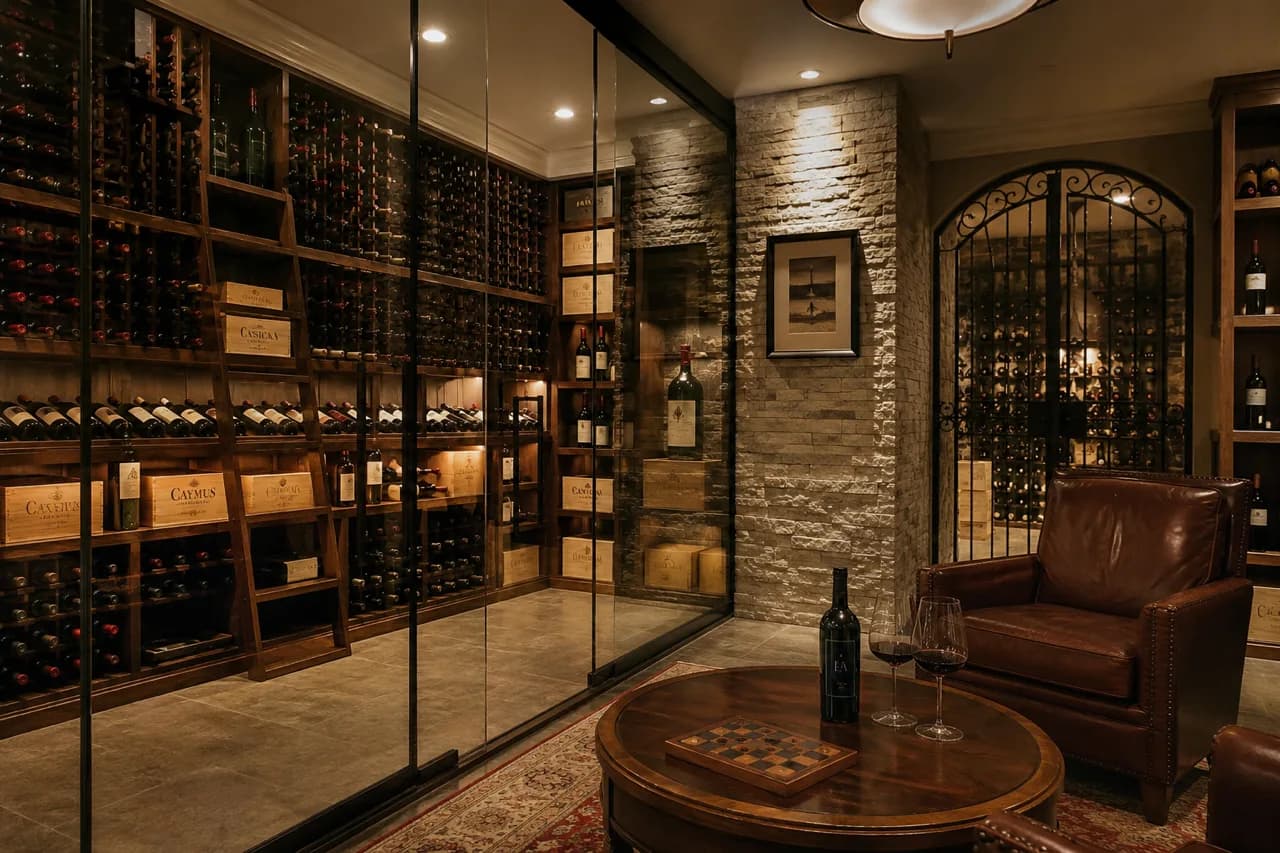
People decide how they feel about a place very quickly, well before they can explain why. In a wine storage business, that first impression carries unusual weight, because you are asking a stranger to hand over something valuable, personal and often irreplaceable. The front of your building answers a question before anyone asks it: are these people careful?
Most operators spend their money and attention on the vault, which is right. But prospects spend their first minutes in the entrance, the lobby and the lounge, and those rooms are doing a great deal of selling, or undoing a great deal of it, long before the tour reaches the lockers.
The approach begins outside
Your first impression starts in the parking lot. Is it obvious where to park and which door to use? Is the signage clear from the street, or does a first-time visitor circle the building on the phone asking where you are? A confused arrival starts the visit with a small feeling of friction, and every later impression has to work against it.
Stand outside your own entrance at the time of day most tours happen. Look at it as a stranger would. Are there dead plants by the door? A faded vinyl sign? Delivery boxes stacked where guests walk? None of these things say anything about how well you store wine, but all of them say something about how much attention you pay to detail, and detail is exactly what a collector is paying you for.
Temperature, light and sound
Walk through your door and notice what your body notices. A wine storage lobby should feel cool without being cold, calm without being silent, and lit warmly enough to feel welcoming while still looking clean. Harsh overhead fluorescent light is the single most common mistake. It makes even a beautiful room feel like a warehouse office. Warm lamps and focused lighting on a few bottles change the mood entirely.
Listen, too. The hum of cooling equipment is part of the business, but it shouldn’t dominate the room where you greet people. If the compressors are loud at the front desk, soft music or better insulation can help. People associate quiet with care and noise with industry, and you want your members to feel that their wine is resting rather than being processed.
Who greets them, and from where
The person at the front matters more than the furniture. Ideally someone stands up, comes around the desk and says hello by name when a visitor is expected. A greeting delivered from behind a monitor, eyes still on the screen, tells a new visitor they are an interruption. A greeting delivered face to face tells them they are the point.
Look at the desk itself. Is it clean, with a single screen and nothing else, or is it buried in paperwork, sticky notes and packing tape? A cluttered front desk quietly suggests that records are kept the same way. Moving the working mess to a back office is one of the cheapest and most effective changes an operator can make.
What’s on the walls
Resist the urge to cover the lobby in certificates and awards. A few well-chosen things say more. Some operators hang a simple map of the vault, showing rows and sections, which quietly signals that everything has a place. Others display a single remarkable bottle or a large-format bottle on a stand. Photographs of member events, used with permission, show that this is a place where people gather rather than a place where boxes sit.
Whatever you choose, it should feel curated rather than decorated. The lobby is a small preview of how you will treat the collection. If it looks considered, prospects assume the vault is considered too.
Give people somewhere to sit
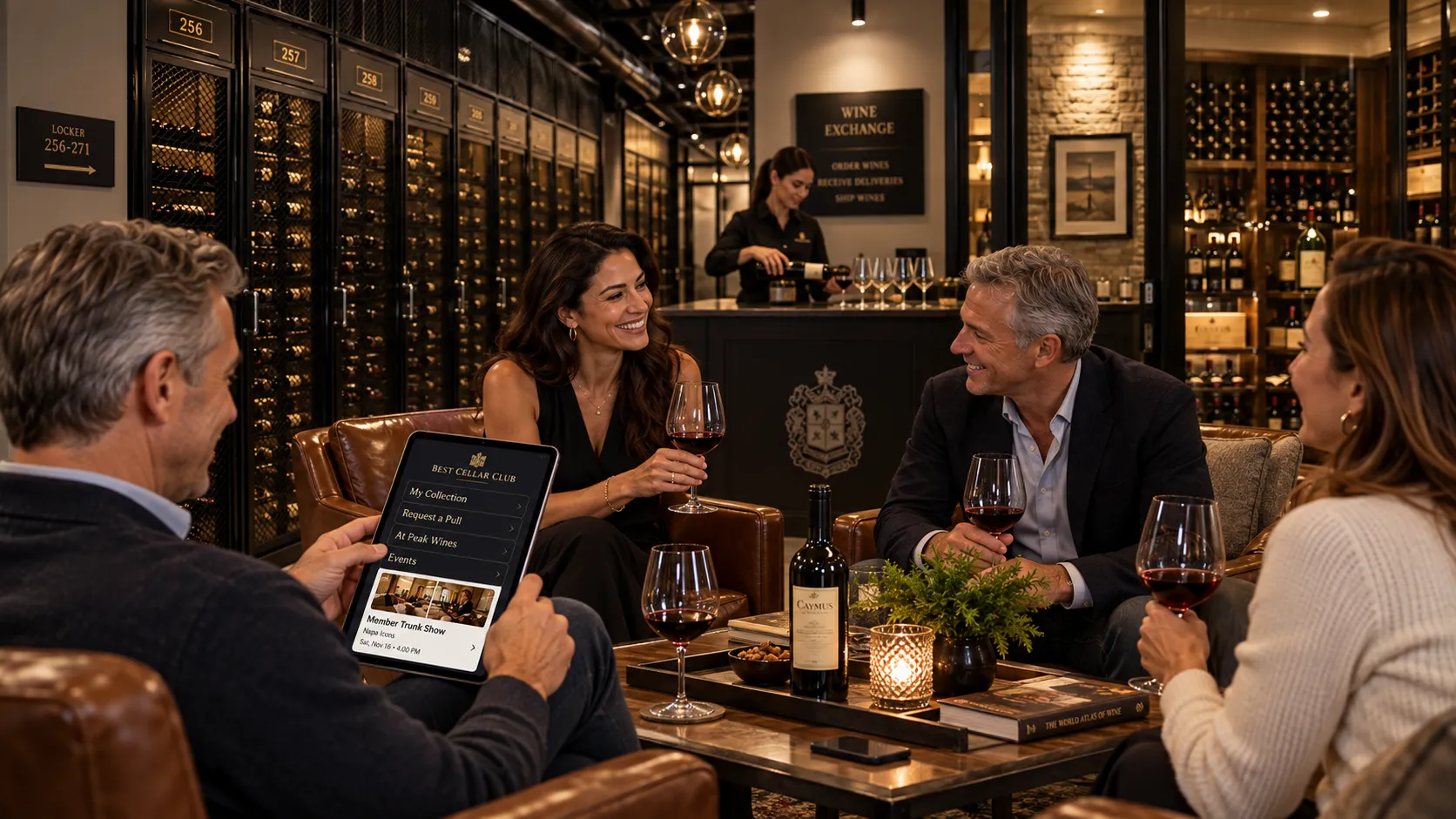
Even a small facility benefits from a proper seat. Two comfortable chairs and a low table are enough. That is where you start and end tours, where members wait for a pull, and where you can pour a glass during a membership conversation. A seat slows people down, and a person who slows down is a person who is considering, not just browsing.
If you have the space for a real lounge, use it for more than decoration. A lounge that hosts tastings, a monthly members’ evening or simply a place to open a bottle with a friend turns the building from a storage site into a club. Members who use the space tend to stay for years, and prospects who see it in use can picture themselves there.
The small things that feel big
Clean restrooms. Proper glassware, not plastic. A place to hang a coat. A bottle opener that works. Water offered without being asked. None of these ever appear in a brochure, and all of them are noticed. Collectors who spend real money on wine have usually spent time in excellent restaurants and hotels, and they carry those standards with them into your building.
It also helps to have a small, handsome way to hand things over. A pull that arrives in a clean branded bag or a sturdy shipper, rather than a recycled carton from the back, closes the visit with the same care it opened with. That last impression is the one people describe to their friends.
Your digital front of house
Here is the part many operators overlook. For a lot of your members, the physical lobby is somewhere they visit a few times a year. The place they actually spend time with your business is on their phone: checking what they own, requesting a bottle, reading a statement. That screen is your front of house for most of the year, and it should feel like your building, not like a generic piece of software.
This is why a white-label member portal matters. When members open their collection and see your name, your colors and your contact details, the experience continues the one they had walking through your door. When they see an unfamiliar vendor’s brand, the relationship quietly shifts away from you. Treat the portal with the same care as the lobby, because to your members, it is the lobby.
Train everyone who works the front
A beautiful lobby can be undone by one rushed interaction. Everyone who might greet a visitor, including staff who mainly work in the vault, should know how to welcome someone, offer a seat and a glass of water, and find the right person without leaving the visitor standing alone. It takes an hour of training and a short written guide, and it pays for itself the first time a prospect arrives unexpectedly on a busy afternoon.
Members notice consistency. If the welcome is warm on Tuesday and distracted on Saturday, they remember the Saturday. Agree as a team on a few standards: greet within a few seconds, use names, never let a member wait without an explanation, and walk people out rather than pointing to the door. Small habits, repeated every day, are what visitors describe when they say a place feels different.
It also helps to rehearse the awkward moments. What does the person at the desk say when a member arrives for a pull that isn’t ready yet, or when a prospect walks in without an appointment while the manager is on a tour? Having an agreed answer turns an uncomfortable minute into a gracious one.
Walk it once a month
Set a recurring reminder to walk your front of house as a first-time visitor would, ideally with someone who doesn’t work there. Arrive from the parking lot, come through the door, wait at the desk and sit in the lounge. Note everything that feels even slightly off. Most of what you find will cost very little to fix.
The goal isn’t luxury for its own sake. It’s consistency. When every part of the building that a visitor sees reflects the same care they expect for their wine, the tour barely has to persuade anyone. The building has already done it.
Built for this. For members who rarely visit, the portal is the lobby. Best Cellar Club carries your name and colors, so the experience on their phone matches the one they felt walking through your door. Take the 2-minute tour →