Most wine storage tours follow the same script. The prospect is met at the door, walked past a long row of lockers, told the room holds at 55 degrees with humidity around 70 percent, shown the generator, and handed a price sheet on the way out. They say it’s beautiful. They mean it. And then a surprising number of them never call back.
The problem is rarely the facility. Anyone who books a tour already assumes your room is cold and your door locks. What they don’t know yet is whether they can picture their own wine here, whether they trust the people who will handle it, and whether leaving it with you will make their life simpler or add one more thing to manage. A tour that closes answers those three questions in that order, and it does most of that work before anyone says a price.
Start the tour before they arrive
The best tours are shaped on the booking call. Three questions are enough: roughly how many bottles do you have, where are they now, and what made you reach out this week. The answers tell you which tour to give. Someone with 200 bottles in a hall closet who just lost a case to a summer power failure needs reassurance about protection. Someone with 1,500 bottles and a kitchen renovation starting in March needs to hear about intake and logistics. Someone who has inherited a parent’s cellar may not know what they have at all, and mostly needs to hear that you can tell them.
Write the answers down and read them again ten minutes before the visit. If you know their name, their rough bottle count and the reason they called, you can open with something far better than “welcome, let me show you around.” You can open with “you mentioned the renovation, so let me show you how we’d get everything out of the house in one morning.” That one sentence does more work than a spec sheet ever will, because it tells them you were listening.
The first two minutes
Greet people at the door, by name, and don’t start walking yet. Offer a seat in your nicest room, even for a minute, and ask them to tell you about the collection. Collectors love this question and are rarely asked it. You’ll learn what they drink, what they’re proud of, which bottle they are saving for a daughter’s wedding, and whether the person standing beside them is enthusiastic or quietly skeptical.
That last point matters more than most operators admit. Storage is often a household decision. If one person is the collector and the other thinks the wine is a hobby that has taken over the basement, you are really giving the tour to the second person. They care about cost, convenience and not having to think about it. Speak to both of them, and don’t let the enthusiast’s questions about vintages swallow the whole visit.
Give the route a beginning, a middle and an end
Walk your own building before the next tour and plan a deliberate path. A good route starts somewhere warm, moves into the storage itself, passes the place where the real work happens, and ends back in a comfortable seat. Too many tours finish in a corridor next to a fire door, which is exactly where the price conversation then takes place, standing up, with everyone slightly uncomfortable and looking for the exit.
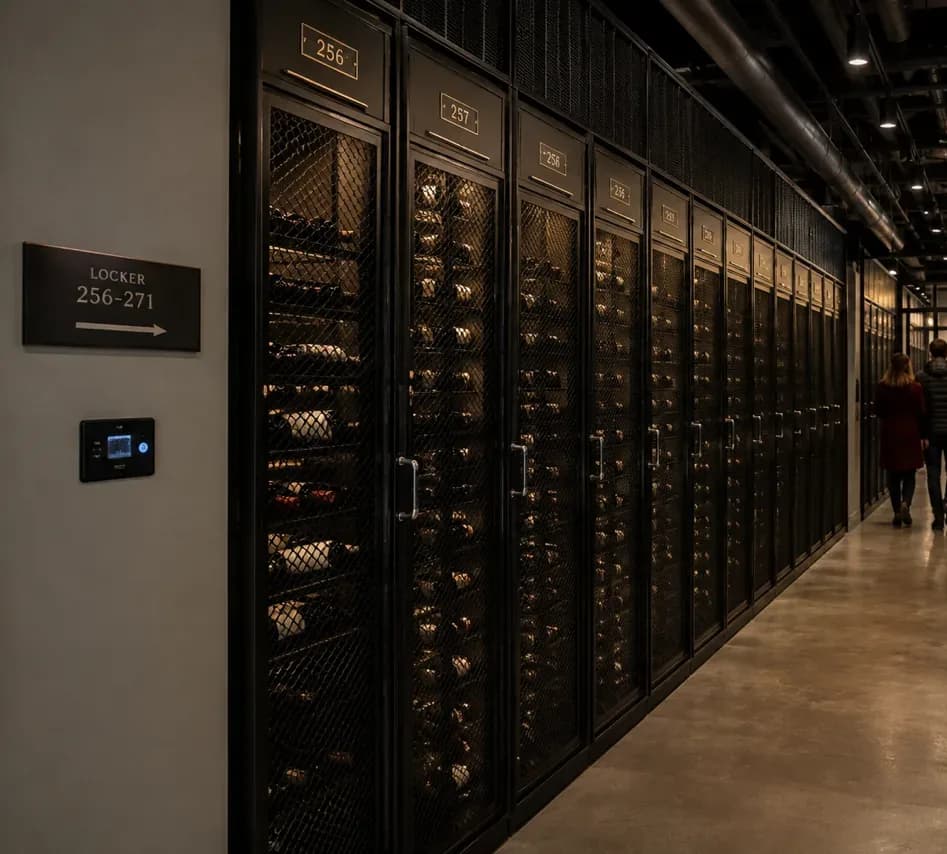
The middle of the tour is the aisle, and it’s where people go quiet. Let them. Stop at a real locker or a working concierge bin rather than an empty showpiece, and describe what’s inside in general terms: a mixed case of Burgundy, a few magnums, three bottles waiting on a pull for Friday. Specific detail reads as competence. So does a clean, labeled bin with a barcode on it, and a staff member who can say what’s in it without checking a binder.
Talk about what happens when things go wrong
Prospects rarely ask about failure out loud, but every one of them is thinking about it. Bring it up yourself. Show the temperature record, tell them what triggers an alarm and whose phone rings at three in the morning, and explain what the generator covers and for how long. Then explain what happens if a bottle is ever misplaced, because a calm and specific answer to that question is worth more than any promise that it never happens.
The operators who close well talk about their process for handling mistakes rather than claiming they don’t make them. Every bottle is recorded when it arrives, every move between locations is logged, and every pull leaves the building with a signed release. When a collector hears that there is a trail behind each bottle, the idea of handing over wine worth tens of thousands of dollars starts to feel ordinary, which is precisely the feeling you want them to leave with.
Put the member experience in their hands
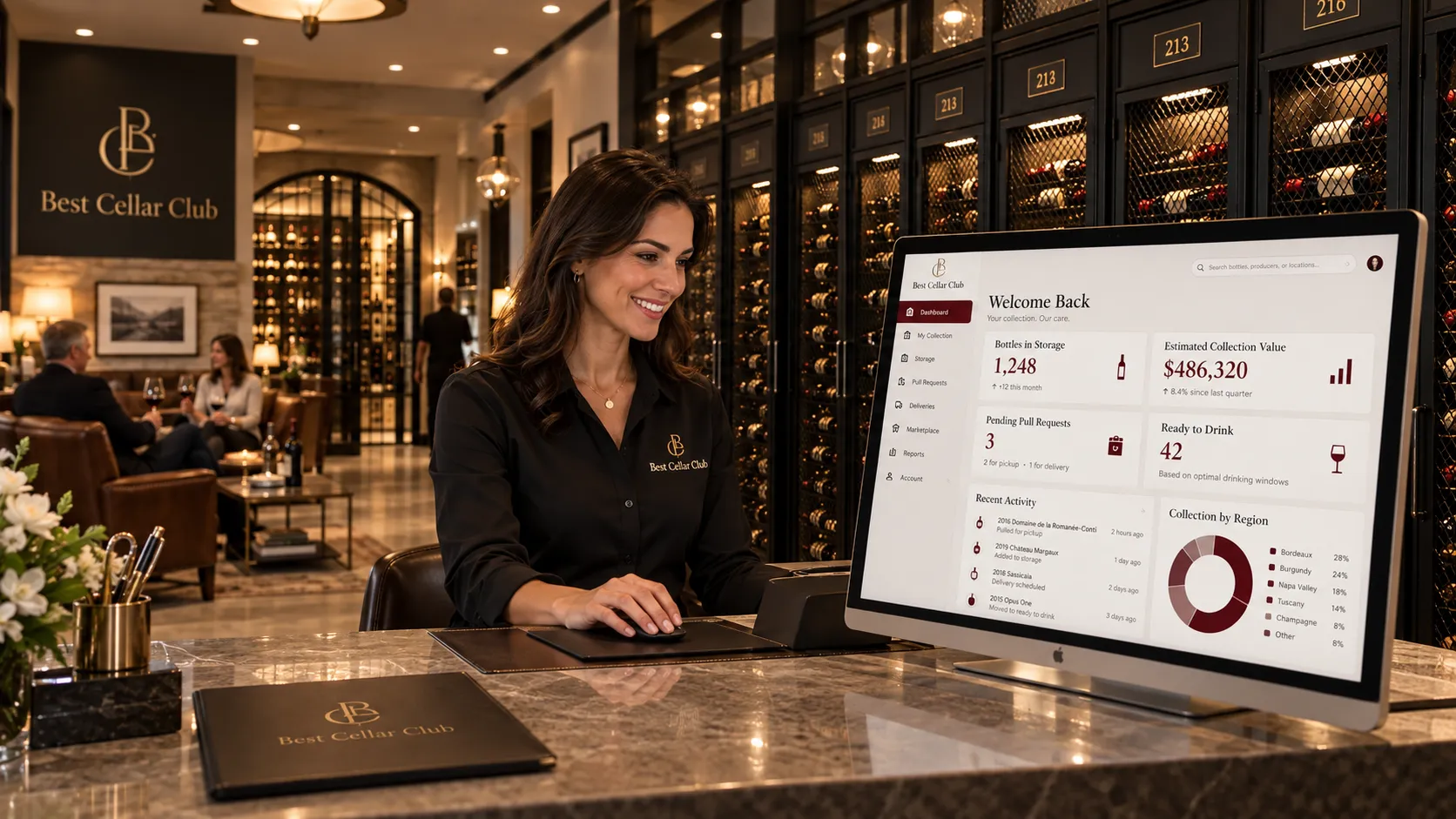
This is where many tours miss their biggest opportunity. You have spent twenty minutes showing a room, but the thing members interact with most after they sign is not the room. It’s their phone. They check what they have, see what’s ready to drink, ask for a bottle to be pulled for the weekend and look at their statement. If you can show that experience on the tour, you are showing them what membership will actually feel like on an ordinary Tuesday, months from now, when the lounge is a memory.
With Best Cellar Club, the simplest way to do this is to keep a demo member account loaded with a realistic collection and hand the prospect a phone or tablet signed into it. Let them scroll. Let them tap a bottle and see where it sits in its drinking window, or open the request screen and see how a pull works. Then take the phone back and look up a bottle on the shelf beside you, so they watch its bin location appear. It takes ninety seconds and it answers the question every collector has and seldom voices: will I actually know what I own?
Say the price yourself, sitting down
Back in the seat, bring up pricing before they have to ask. Hesitating makes any number feel bigger than it is. State it plainly, then set it next to the thing it protects. For a collector with 300 bottles, a month of storage usually costs a small fraction of what they would lose if one case spent a hot week in a garage. You don’t need to lecture anyone. One sentence connecting the fee to the collection they just described to you is plenty.
If you offer both lockers and concierge storage, this is the moment to recommend one. Don’t lay out every option and ask them to choose. Based on what they told you on the booking call, say which plan you would put them on and why. People are grateful for a clear recommendation from someone who plainly knows the business, and it spares them a decision they don’t feel qualified to make on the spot.
Ask for a specific next step
The weakest possible ending to a tour is “let me know if you have any questions.” It hands the next move to the prospect, who is busy, who fully intends to call you, and who won’t. End instead with a concrete proposal: “We have intake availability on Thursday the 14th. Shall I pencil you in, and we’ll confirm the plan by email tomorrow?” That isn’t pushy. It’s what a professional who wants the business sounds like, and most people find it a relief.
Some people will say they need to think about it, and that is completely fine. Agree on what happens next anyway. Tell them you’ll send a short summary tonight with the plan you recommended and the price, and that you’ll check in on a particular day. Then do exactly that. What you send, and when you send it, deserves its own discussion, because the days after a tour are where most memberships are actually won or quietly lost.
Make every tour a little better than the last
Keep a simple record of each tour: who came, what they cared about, which plan you recommended and whether they signed. After a dozen of them, patterns start to show. Maybe everyone lights up in the lounge and nobody cares about the loading dock. Maybe the phone demo converts better when it comes before the aisle instead of after it. Adjust the route and the words based on what you see, not on what you assumed when you opened.
A tour is the one sales conversation you fully control. You choose the room, the lighting, the order and the words. Treat it as a piece of service you design deliberately, and practice it the way a good sommelier practices a wine presentation, and it will do more for your occupancy than another round of advertising ever will.
Built for this. Best Cellar Club lets you hand a prospect a phone signed into a demo member account, so the tour shows what membership feels like on an ordinary Tuesday, not just what the room looks like. Take the 2-minute tour →