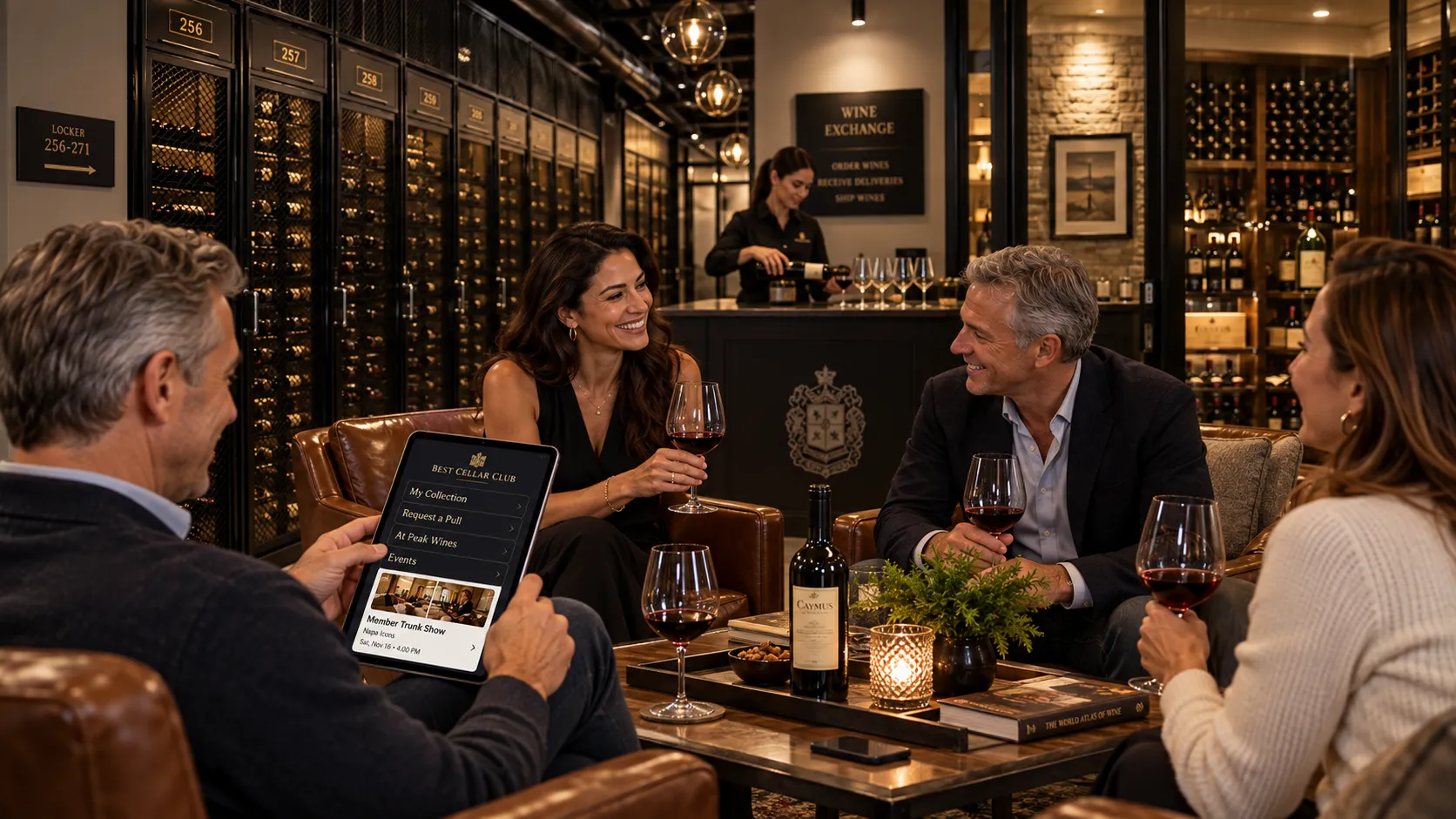
Think about the people who attend a charity gala in your city. They tend to be established, generous, socially connected, and many of them collect wine. They are sitting in one room for an evening, often with a glass in hand, and a good part of the night is spent reading the auction catalog. It is hard to imagine a better gathering of prospective members.
Donating a thoughtfully designed lot to the right auction puts your business in front of that audience in the most favorable possible light: generous, local and associated with a cause they care about. Done well, it is one of the most effective forms of marketing available to a storage operator. Done carelessly, it is just a gift certificate nobody bids on.
Why auctions work when advertising doesn’t
Advertising asks people to notice you while they are busy doing something else. An auction lot is read deliberately by people who are looking for something to want. It arrives with the implied endorsement of the charity and the event committee, and anyone who bids is, by definition, telling you they are interested in what you offer.
There is also a social dimension. At a gala, lots are discussed at tables and bidding is public. When two guests compete for your lot, everyone nearby learns that your storage is something people want. That quiet signal travels further than you might expect, and it lingers long after the event ends.
Design a lot people will actually fight over
A lot that reads “one year of wine storage” is worthy but dull. Package an experience instead. For example: a year of concierge storage for up to a set number of cases, a private tasting for eight guests in your lounge led by a sommelier, and a professional inventory and appraisal of the winner’s existing collection. That is a story someone can picture, and it is far more exciting to bid on than a service.
Be generous in presentation and disciplined in the details. Set a sensible cap on volume so the lot doesn’t become an open-ended obligation, give it a clear expiry date, and state any conditions plainly in the catalog. Photograph your lounge beautifully for the catalog page, because at most galas, the lot with the best photograph gets the most attention.
Choose the right auctions
Not every charity event is a good fit. Look for organizations whose supporters overlap with your ideal members: arts organizations, hospital foundations, private schools, food and wine charities and local civic causes. The best leads often come from your existing members, many of whom sit on boards or help organize these evenings. Ask them which events they attend, and whether they would introduce you.
Consider a small number of well-chosen events each year rather than donating to every request you receive. Two or three auctions where your lot is presented properly will do more than a dozen where it is buried among restaurant gift cards. It also allows you to build a real relationship with the organizers, who will then place you more prominently next time.
Be present on the night
If you can, attend the event. A lot with a real person behind it performs better, and you will be able to answer questions from curious guests. Keep it gracious rather than salesy. You are a supporter of the charity first. A simple conversation about what you do, and an invitation to visit, is plenty.
Some operators also offer to pour for the event, supply wine storage for the gala’s own bottles, or provide a small display. Check with the organizers about what would genuinely help them. The more useful you are to the committee, the more they will champion you, both on the night and to their friends afterwards.
Follow up with the winner, and the room
The winner is your first new member, so treat their onboarding as a showcase. Contact them within a week, schedule their private tasting promptly and make intake smooth and generous. Their tasting guests are prospects too, sitting in your lounge, seeing the service first hand. Many operators find that the winner’s guests produce more memberships than the winner.
Underbidders are valuable as well, but respect privacy. Ask the organizers whether they are willing to share contact details or pass on a message, and never assume permission you haven’t been given. A simple note offering underbidders an invitation to visit, delivered through the charity, is both appropriate and effective.
Account for it honestly
Treat each donated lot as a marketing investment and track it. Estimate the real cost of what you are giving, which is mostly staff time and space rather than cash, and record how many tours, members and referrals each event produces over the following year. Some events will be clear winners and others won’t, and the numbers will guide next year’s choices better than instinct.
Tax treatment of donated services and goods varies, so speak to your accountant about how to record them. Don’t let that complexity put you off. For most operators, the combination of goodwill, visibility and highly qualified introductions makes a well-chosen charity auction one of the best returns in the marketing budget.
A lot description that sells
It helps to see how a strong catalog entry reads. Something like this works well: “A Year in the Cellar. Twelve months of concierge storage for up to ten cases of your wine in our climate-controlled vault, including a complete inventory and valuation of your collection. Then gather seven friends for a private tasting in our members’ lounge, hosted by our sommelier, with wines chosen to your taste. Valid for one year from the date of the auction.”
Notice what that description does. It leads with a feeling rather than a service, it describes something the winner can share with friends, and it includes the inventory and valuation, which many collectors have wanted for years without ever arranging it. It is also clear about the limits, which protects you without spoiling the romance of the lot.
Before the event, check that the catalog wording matches exactly what you intend to provide, and keep a copy. Winners occasionally read a lot generously, and a clear written description settles any question politely.
Make the organizers’ lives easier
Event organizers are busy, often volunteers, and they deal with dozens of donors. Make their job easy. Deliver your lot details, photographs and any certificate well before the deadline, in exactly the format they ask for. Offer to help with anything else the event needs, whether that is advice on the wine served at dinner or storage for bottles donated by other supporters.
If the charity allows it, ask for a short mention from the auctioneer when your lot comes up. A single sentence about who you are and what you do, delivered from the stage, reaches every guest in the room at the moment they are paying attention.
After the event, send the committee a thank you and a short note on how you will look after the winner. Organizers remember donors who are gracious and reliable, and they are often well connected people who talk to exactly the audience you want to reach. Some of your best future members may turn out to be the committee members themselves.
The longer game
The real value of auctions builds over years. Donate to the same event annually and you become part of its tradition. Guests start to look for your lot. Committee members mention you to friends. Your name appears in the programme alongside the city’s most respected businesses.
That kind of standing cannot be bought through advertising. It is earned slowly, through generosity that is visible, consistent and genuinely connected to the community you serve. For a business built on trust, there are few better places to earn it.
Built for this. When the winner arrives for their private evening, give them the full member experience. Best Cellar Club lets you publish events to members and set a new collector up with their own branded portal on intake day. Take the 2-minute tour →